At Crown Management Services and Insulation, we understand that the ceiling assembly separating a garage from the living space above it is not simply a floor, it is a critical boundary between a contaminated environment and the air your family breathes. Carbon monoxide, volatile organic compounds from stored chemicals, and particulate matter from vehicle exhaust migrate through every gap, penetration, and unsealed joint in that assembly unless a continuous air barrier is installed and verified.
We focus on long-term performance, safety, and efficiency, treating garage-to-living-space separation as a primary health installation, not a comfort upgrade.
The Hidden Dangers of Shared Structural Boundaries
The garage ceiling in most attached-garage homes was never designed to function as an exterior boundary. In practice, however, it must perform exactly like one. The garage is an unconditioned, semi-exterior space that regularly contains concentrated airborne hazards: carbon monoxide from running vehicles, benzene and toluene from gasoline vapors, formaldehyde from stored adhesives and paints, and moisture-laden air that carries these contaminants upward through the floor assembly.
We treat every garage ceiling as a primary exterior boundary because the consequences of failure are measurable and serious. Carbon monoxide is odorless and colorless. A family living above an attached garage may be exposed to low-level CO infiltration for years without recognizing the source.
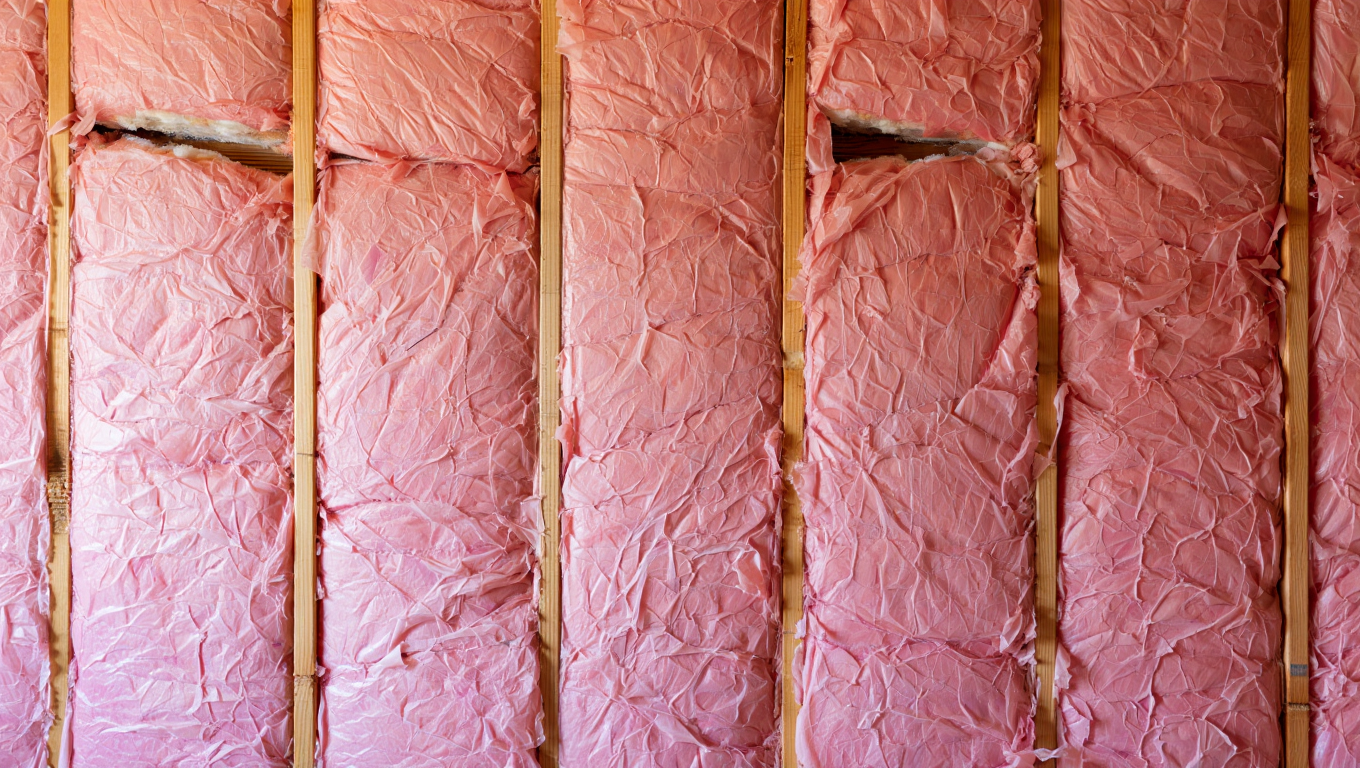
What we find during assessments is consistent. The garage ceiling typically has fiberglass batt insulation between joists with no air sealing at penetrations for electrical wiring, HVAC ductwork, plumbing risers, or recessed light fixtures. Each penetration is a direct pathway for contaminated air. In many homes, the batts have sagged, compressed, or been displaced by rodent activity, leaving sections effectively uninsulated and open to air transfer.
Our team specializes in identifying every breach in this boundary. The garage ceiling must function as a sealed exterior wall turned horizontal. Anything less leaves the living space vulnerable.
How Unsealed Garages Compromise Indoor Air Quality
The mechanism that drives garage contaminants into living spaces is well understood in building science: the stack effect. In a typical two-story home with an attached garage, warm interior air rises toward the upper floors and attic, creating negative pressure at lower levels. That negative pressure pulls replacement air from every available opening, including the unsealed garage ceiling. The garage acts as a reservoir of contaminated air drawn upward through the floor cavity into bedrooms, hallways, and living areas.
This is not a theoretical risk. The EPA has published research confirming that attached garages are a significant source of indoor air pollution, with concentrations of benzene and other VOCs measured at substantially higher levels in homes with attached garages compared to those without.
Moisture compounds the problem. Vehicles driven in wet or winter conditions introduce water, slush, and salt-laden moisture into the garage. That moisture evaporates and follows the same stack-effect pathway upward, condensing on cooler surfaces inside the floor cavity and creating conditions for mold growth on subfloor sheathing, rim joists, and joist bays.
In Fairfield County, Connecticut, these conditions are widespread. In neighborhoods like Harbor Point in Stamford, where newer attached-garage construction meets coastal humidity, the combination of moisture migration and contaminant transfer demands that the garage ceiling receive the same rigor as any exterior wall assembly.
Along the Long Island Sound corridor and through Back-Country Greenwich, we consistently find garage ceiling assemblies built to minimum code standards that addressed thermal resistance but did not require continuous air sealing.
Creating an Impenetrable Air Barrier with Crown Insulation Services
Our process for sealing the garage-to-living-space boundary is systematic and verifiable. We treat it as the creation of a continuous Class II vapor retarder and air barrier that eliminates both contaminant pathways and uncontrolled moisture transfer.
The first step is a full assessment of the existing assembly. We identify and document every penetration, gap, and area of insulation failure, electrical boxes, wire penetrations, plumbing risers, HVAC boots, rim joist connections, and perimeter framing transitions. Each point represents a potential breach that must be sealed before insulation is applied.
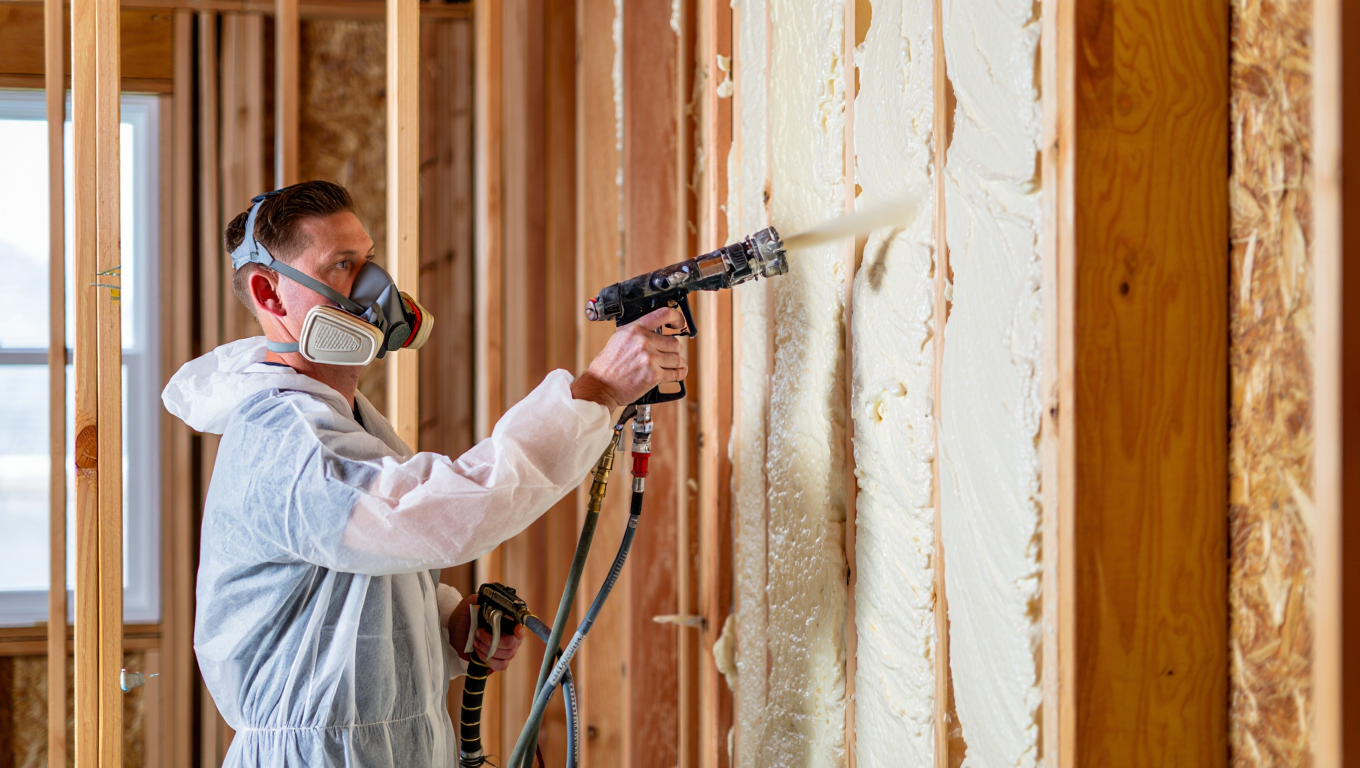
We install closed-cell spray foam insulation to the garage ceiling assembly. Closed-cell spray foam is the appropriate material for this application for three reasons. First, it bonds directly to the subfloor sheathing and joist faces, eliminating gaps that allow air passage. Second, at the thickness we specify, typically a minimum of two inches, closed-cell spray foam achieves a permeance rating below 1.0 perm, qualifying as a Class II vapor retarder under the International Building Code. Third, closed-cell spray foam does not absorb water, sag, or degrade under garage temperature and humidity conditions.
We use USA-made high-performance spray foam for every garage ceiling application. We do not substitute open-cell spray foam in this context. While open-cell foam provides effective air sealing in other applications, interior partition walls, conditioned attic assemblies, it is vapor-permeable and does not provide the moisture control a garage ceiling boundary requires.
At Crown Management Services and Insulation, we verify every installation by confirming continuous coverage, checking perimeter seal integrity, and documenting final installed thickness. Spray foam installed in the garage must be covered with a code-compliant thermal barrier, typically the existing drywall ceiling, which we assess for integrity before and after installation. All work aligns with NFPA fire safety standards and applicable IBC thermal barrier requirements.
Does Garage Insulation Block Vehicle Exhaust?
Properly installed garage insulation does block vehicle exhaust migration when the installation creates a continuous, verified air barrier. Fiberglass batts alone do not stop air movement. Closed-cell spray foam applied to the full garage ceiling assembly seals penetrations, joist bays, and rim joist connections to prevent carbon monoxide and exhaust particulates from reaching living spaces above.
Why Consult an Insulation Contractor in Stamford CT for Air Quality Concerns?
An insulation contractor in Stamford CT with building science training can diagnose whether your indoor air quality problems originate from the garage boundary. Air quality complaints in rooms above garages, persistent chemical odors, headaches, or unexplained moisture, are often traced to unsealed ceiling assemblies. We assess the boundary, identify breach points, and recommend air-sealing solutions specific to the construction type.
Can Spray Foam Insulation in Fairfield County Stop Garage Odors?
Spray foam insulation in Fairfield County stops garage odor migration when applied as a continuous air barrier across the full ceiling assembly, including all penetrations and rim joist connections. Odors from gasoline, paint, solvents, and exhaust follow air leakage pathways. Closed-cell spray foam eliminates those pathways by bonding directly to framing and sheathing surfaces with no gaps or seams.

Service Applications
The conditions described in this article are among the most common reasons property owners contact us for residential insulation assessments. Garage ceiling air sealing directly supports occupant health, HVAC efficiency, and moisture management throughout the home.
Where we identify rodent-contaminated insulation in existing garage ceiling assemblies, we perform rodent-contaminated insulation removal before any new installation. Compromised material must be safely extracted, the cavity sanitized, and entry points sealed before spray foam is applied.
In commercial applications involving parking structures beneath occupied space, we apply the same air-barrier principles at a larger scale using commercial spray foam CT systems and spray-applied fireproofing where fire-resistance ratings are required. Soundproofing insulation may also be incorporated where noise transmission from the garage level to occupied floors requires acoustic control.
Crawl space insulation and encapsulation follows a parallel methodology, sealing the boundary between a contaminated or unconditioned zone and the occupied living space above it. The building science is the same. The contaminants differ, but the solution framework does not.
We provide free thermal audits and on-site assessments for property owners concerned about air quality, comfort, or energy performance related to attached garage construction. Our evaluations are factual, documented, and focused on safety, performance, and long-term building health.
Crown Insulation Services 48 Union ST (914) 609-4216