At Crown Management Services and Insulation, one of the most common calls we receive starts the same way: “We can hear everything through our walls.” Footsteps from the floor above. Conversations from the next room. Rain that sounds like drumming overhead. These are not problems caused by thin walls or poor construction. They are caused by insulation that is no longer doing its job.
Think of insulation like a thick blanket stuffed inside your walls and ceilings. When that blanket is full and fluffy and pressed firmly against every surface, sound has a hard time getting through. But when that blanket gets old, it shrinks, sags, and falls apart. Now there are empty pockets inside your walls, hollow spaces where there used to be protection. Sound travels through those empty spaces, and the bigger the empty space, the louder everything gets.
We approach every building as if it were our own. That means we find where the blanket has failed, take it out safely, and put in something that will stay in place permanently.
Why Aging Insulation Fails to Block Sound Transfer
Most homes built between the 1970s and early 2000s were insulated with fiberglass batts. These are pre-cut rectangles of spun glass fiber that get pushed between the wooden framing inside your walls and ceilings. When they are first installed, they fit snugly. They fill the space. They work.
But fiberglass batts are not attached to anything. They are held in place by friction, by being slightly wider than the space they are pushed into. As time goes on, things change. Gravity pulls the material downward. Moisture from humid air makes the fibers heavier and causes them to clump. Temperature swings cause the material to expand and contract repeatedly until it loses its shape. Mice and squirrels tunnel through it, push it aside, or use it for nesting.
The result is walls and ceilings that are partly filled and partly empty. The filled sections still provide some protection. The empty sections provide none. Sound passes through those gaps as easily as if there were no insulation at all. In fact, the hollow cavity can actually make things worse, it acts like the inside of a drum, amplifying vibrations instead of absorbing them.
This is why a home that was quiet when it was new can become noticeably louder as it ages. Nothing about the walls themselves has changed. The insulation inside them has simply stopped filling the space it was designed to fill.
Getting Things Done VS Striving for the Best
Backed by more than ten years of industry leadership, our team does not walk into a home and immediately start tearing things out. We start by figuring out exactly what is happening inside the walls and ceilings, and then we explain it in plain terms so you can make an informed decision.
Our diagnostic plan works like this. We inspect every area we can physically access, attic floors, crawl spaces, basement rim joists, and any wall cavities that are open or accessible. We look at the existing insulation, check whether it still fills the cavity, and note where it has sagged, compressed, gotten wet, or been disturbed by pests. In areas where we cannot see inside the wall directly, we use thermal imaging cameras. These cameras show temperature differences on the surface of the wall. A cold spot in winter or a hot spot in summer tells us there is a void behind the surface where insulation is missing or has failed.
Once we have a complete picture, we walk you through what we found. We show you where the insulation has failed, explain why it failed, and describe what that means for both sound and temperature in your home. Hollow cavities do not just let sound through, they also let heat escape in winter and let heat in during summer, which makes your HVAC system work harder and costs more to operate. In homes where rodents have damaged the insulation, there are also air quality concerns from droppings and nesting debris that need to be addressed.
We help property owners understand the full picture before any work begins. Our recommendations are based on a specific problem we encountered during the inspection.
Upgrading to Superior Soundproofing Insulation
Once we know where the problems are, we follow a simple sequence: remove what has failed, clean the space, and install something better.
If the old insulation has been contaminated by mice, rats, or squirrels, we perform rodent-contaminated insulation removal as the first step. This is not optional. Contaminated material cannot be left inside the wall or compressed underneath new insulation. It has to come out completely. We extract it safely, sanitize the cavity, and seal the entry points that allowed rodents in before we install anything new.
For insulation that has simply settled, compressed, or lost contact with the surrounding surfaces, we extract it and prepare the cavity for replacement.
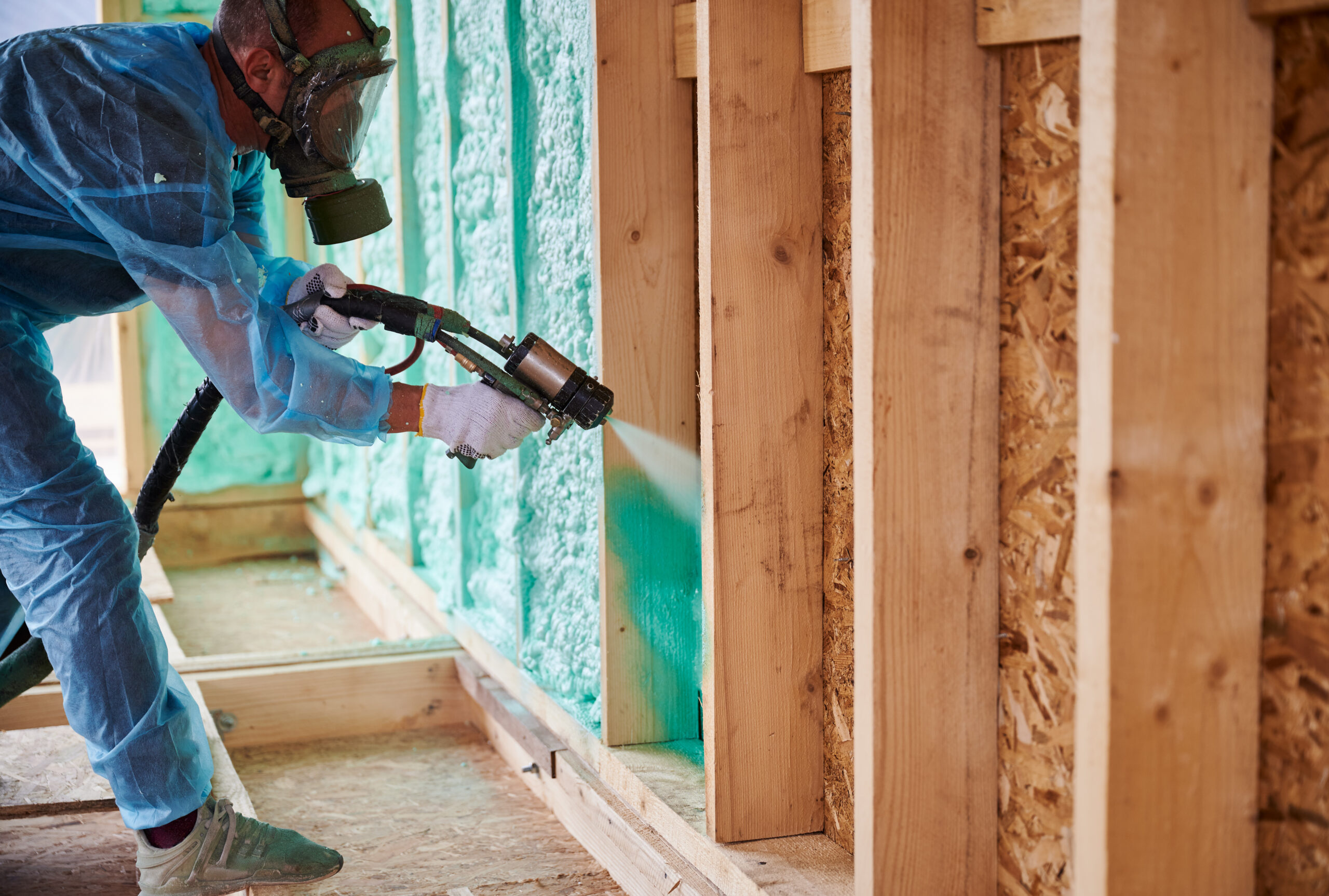
What we install in its place is spray foam insulation. Here is the simplest way to understand why spray foam solves the problem that fiberglass batts could not. Over time, fiberglass can slide, shrink, and leave gaps. Spray foam is applied as a liquid that expands and hardens in place. It bonds directly to the wood framing, the sheathing, and every surface it touches. It fills every corner, every gap, every irregular space. Once it cures, it does not move. It does not sag. It does not settle. The hollow voids that were causing your sound problems are permanently gone.
We use two types depending on what each specific area needs. Open-cell spray foam is lighter and softer, it is excellent at absorbing sound and is our primary recommendation for interior walls and ceilings where acoustic performance is the goal. Closed-cell spray foam is denser and also blocks moisture, we use it in areas exposed to the outdoors or to unconditioned spaces like garages and crawl spaces where both sound control and moisture protection are needed.
We use USA-made high-performance spray foam in every application. At Crown Management Services and Insulation, we verify every installation for complete coverage before the job is considered finished.
Does Blown-in Attic Insulation in CT Reduce Heavy Rain Noise on the Roof?
Blown-in attic insulation CT does reduce rain noise when the material completely fills the cavity between the roof and the living space. Dense-packed materials and spray foam applied to the roof deck are the most effective because they leave no air gaps for sound to pass through. Old fiberglass with voids or settlement will not meaningfully reduce rain noise.
Why Choose the Best Rated Insulation Company in CT for Acoustic Upgrades?
The best rated insulation company CT for acoustic work will diagnose why sound is getting through before installing anything. Sound problems are caused by gaps and voids inside the assembly, simply adding more material on top of failed insulation does not fix the underlying problem. Proper diagnosis, extraction of failed material, and complete cavity fill are what produce lasting results.
Are Homes in Cos Cob Prone to Echoing Due to Degraded Insulation?
Many homes in Cos Cob contain original fiberglass insulation that has degraded over decades of exposure to Fairfield County’s coastal humidity and temperature swings. These conditions break down fiberglass faster than in drier climates, creating the hollow voids that cause interior echoing. Homes near the Long Island Sound are especially affected.
Throughout Fairfield County, Connecticut, we see the same patterns. In Back-Country Greenwich and near Greenwich Avenue, older homes frequently contain insulation that has passed its useful life. In Harbor Point in Stamford, Old Greenwich, and Riverside, acoustic complaints are often the first sign of broader insulation failure. The sound problem is real, but it usually means thermal and moisture performance have declined as well.

Service Applications
Our residential insulation assessments cover wall, floor, and ceiling cavities in single-family and multi-family homes. Attic insulation CT replacement, including blown-in and spray-applied systems, addresses rain noise, HVAC noise, and general sound transfer through roof assemblies.
Soundproofing insulation is installed in shared walls, home offices, media rooms, and anywhere noise control is a priority. Commercial insulation projects address acoustic separation in mixed-use buildings and tenant walls where specific sound ratings must be met.
Where degraded insulation has also created fire safety gaps, we coordinate spray-applied fireproofing and fireproofing paint service to restore both acoustic and fire-rated performance. All work complies with NFPA fire safety standards and International Building Code requirements.
We’re Here to Help You
We provide free thermal audits and on-site assessments for property owners experiencing sound problems, comfort issues, or suspected insulation degradation. Our evaluations are factual, documented, and focused on safety, performance, and long-term building integrity.
Crown Insulation Services 48 Union ST (914) 609-4216