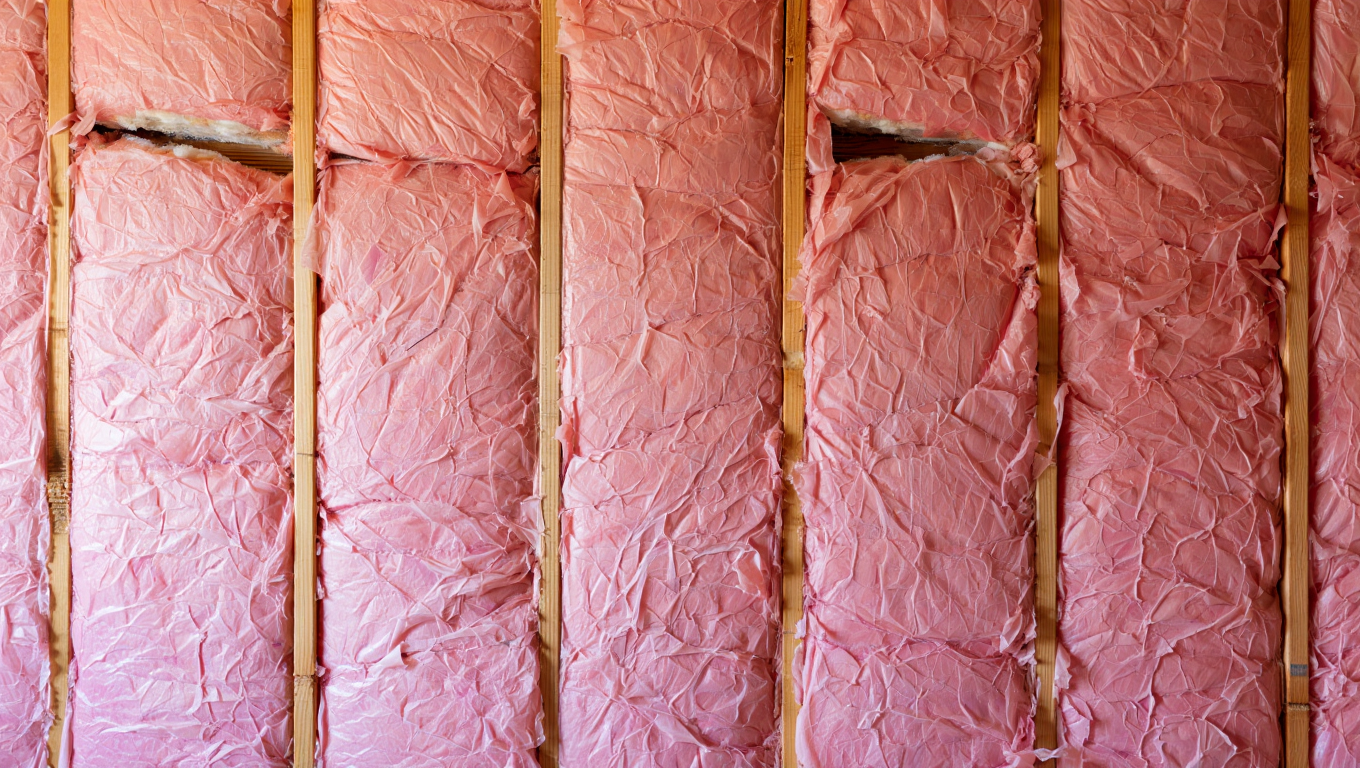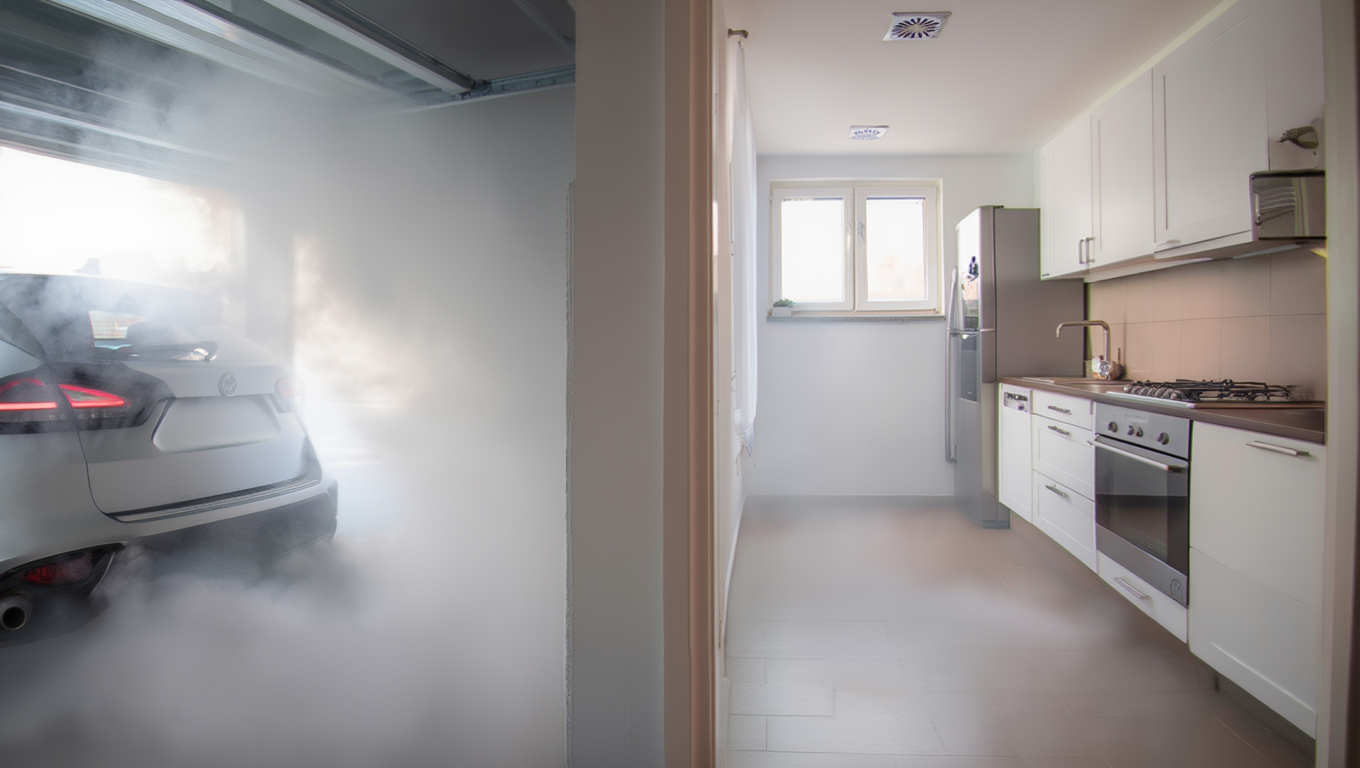
Recent property assessments across Fairfield County, Connecticut have revealed a pattern that most homeowners never think about until it is too late: degraded insulation inside walls and ceilings is quietly creating the conditions for fire to spread faster and farther through a home than it ever should.
From a building science perspective, the issue is straightforward. When insulation settles, sags, or deteriorates over time, it leaves open air gaps inside the wall and ceiling cavities of your home. Those gaps are not just comfort problems or energy problems, they are fire pathways. And in many older Connecticut homes, those pathways exist behind every wall, above every ceiling, and between every floor.
At Crown Insulation Services, we have worked with homeowners who had no idea these conditions existed inside their walls. The framing looks fine from the outside. The drywall is intact. But behind it, the insulation that once filled those cavities has pulled away, compressed, or been destroyed by moisture and pests, leaving channels of open air that a fire can race through with almost no resistance.
We approach every building as if it were our own. That means we treat unsealed cavities as the safety hazard they are, and we address them with code-compliant materials and methods that protect both the structure and the people inside it.
How Gaps in Legacy Insulation Accelerate Fire Spread
Think of the framing inside your walls as a network of vertical and horizontal tunnels. When those tunnels are completely filled with insulation, a fire has to burn through dense material to move from one space to another. It slows down. It loses energy. The insulation acts as a barrier, not fireproof, but fire-resistant enough to buy critical time.
Now imagine those same tunnels with large sections left empty. The insulation has settled to the bottom of the wall cavity, or mice have tunneled through it, or moisture has caused it to clump and pull away from the framing. What remains are open air channels that connect one part of the house to another, from the first floor up through the wall cavity to the second floor, from the living space into the attic, from one room to the next through a shared ceiling plenum.
This is what fire investigators call a “concealed space” problem. Fire enters one of these open cavities and travels vertically and horizontally behind finished surfaces, spreading to areas of the home that are nowhere near the original ignition point. By the time smoke is visible in a second-floor bedroom, the fire may have already traveled through the wall cavity from a first-floor source. The speed of this spread is directly related to how much open air is available inside the assembly.
A large part of residential construction across Fairfield County was built between the 1960s and early 2000s. The original fiberglass batt insulation has had decades to degrade. Gravity, moisture cycling, rodent activity, and simple material fatigue all contribute to the same outcome: cavities that are partially filled and partially open. Every open section is a potential flanking path for fire, smoke, and toxic gases.
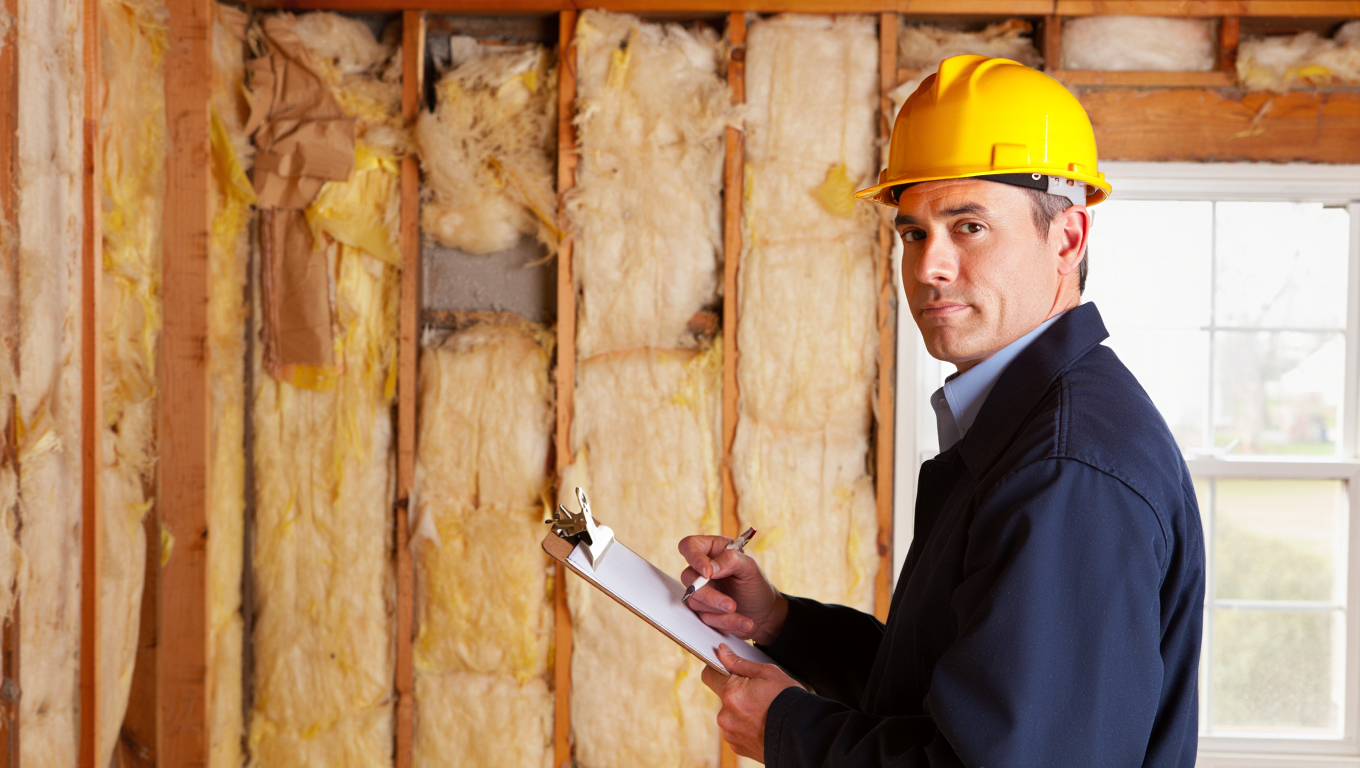
This is a highly overlooked danger because it is invisible. You cannot see the condition of your wall insulation without either removing drywall or using diagnostic tools. Most homeowners discover these voids only after a fire event, or during an insulation assessment conducted for comfort or energy reasons. At Crown Insulation Services, we identify and document these conditions as part of every inspection we perform.
Meeting Modern NFPA Fire Safety Standards in Older Homes
Here is a question worth asking: does your home meet current fire safety standards?
For most older Connecticut properties, the answer is no. Building codes have evolved significantly since many of these homes were constructed. The NFPA fire safety standards that govern flame spread ratings, smoke development indices, thermal barriers, and fire-stopping in concealed spaces are far more rigorous today than what was required when your home was built.
This does not mean your home was built incorrectly. It means it was built to the standards of its era. Those standards did not require continuous fire-stopping in every wall cavity. They did not require thermal barriers over all insulation materials. They did not account for the long-term degradation of fiberglass batts or the fire risk created by settling and void formation over decades of service.
Modernizing the building envelope is a safety necessity, not because the original construction was deficient, but because we now understand fire behavior in concealed spaces far better than we did forty or fifty years ago. The International Building Code and NFPA standards now require that insulation materials meet specific flame spread and smoke development classifications, that thermal barriers separate foam insulation from occupied spaces, and that fire-stopping be installed at floor-to-wall transitions and other critical junctures where fire could travel between concealed cavities.
We help property owners understand where their homes fall short of these current frameworks and what specific upgrades will bring them into compliance. Our recommendations are tied to documented conditions and referenced standards, not generalized suggestions.
Protecting Your Home with Spray-Applied Fireproofing Systems
At Crown Management Services and Insulation, we provide definitive safety solutions by pairing thermal insulation upgrades with professional spray-applied fireproofing systems. This is where fire protection and energy performance converge into a single scope of work.
Our process begins with a thorough inspection to identify every cavity where insulation has failed, settled, or is missing entirely. Where we find rodent-contaminated insulation, we perform complete extraction and cavity sanitization before any new material is introduced. Compromised insulation is a fire risk on its own, dry rodent nesting material inside a wall cavity is highly combustible.
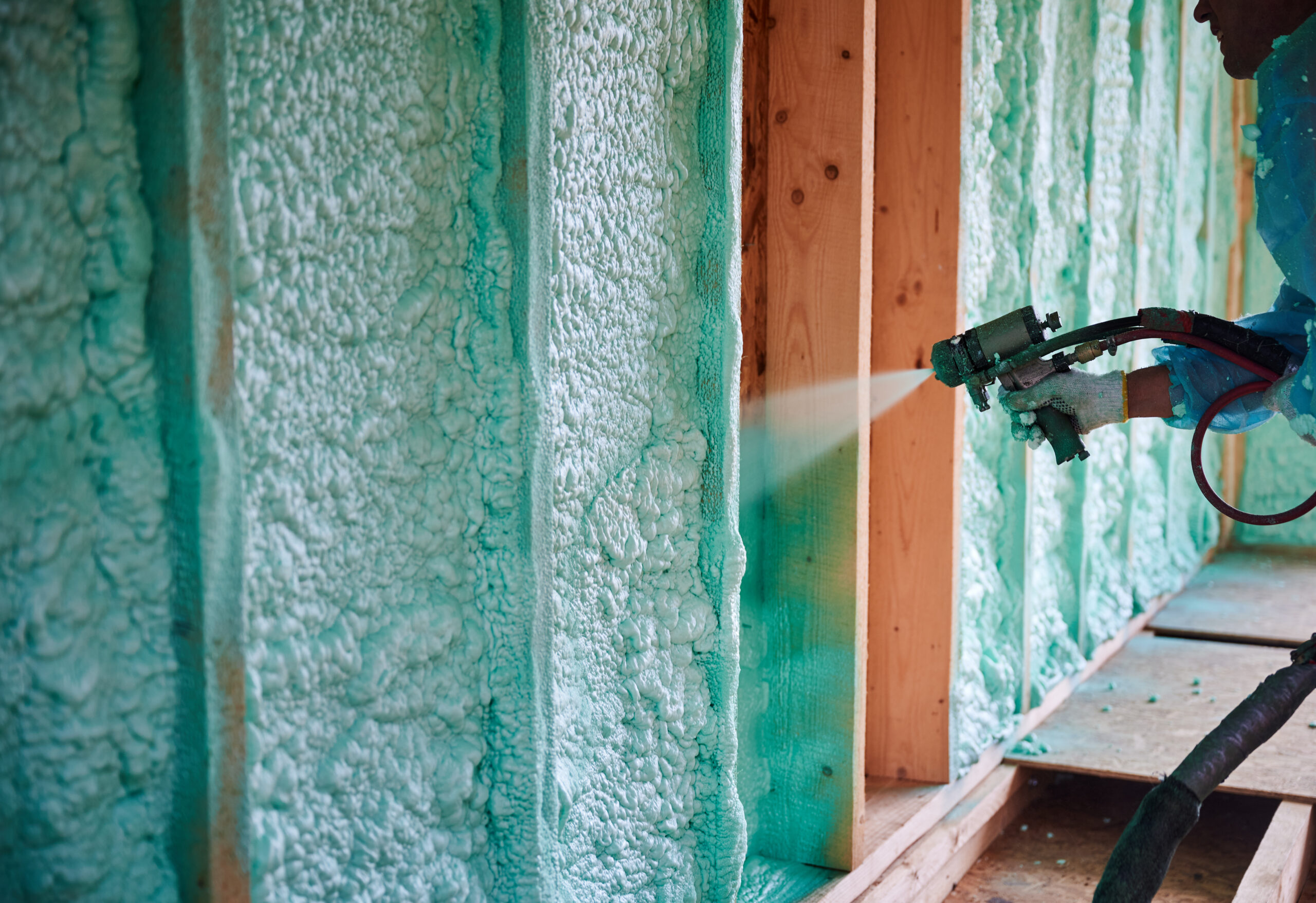
We then install USA-made high-performance spray foam to fill every void, seal every air gap, and eliminate the open channels that allow fire to travel through concealed spaces. Closed-cell spray foam bonds directly to framing and sheathing, creating a continuous barrier with no gaps, no settlement, and no degradation pathway. It meets code-required flame spread and smoke development ratings when installed with appropriate thermal barriers.
For structures requiring rated fire-resistance assemblies, particularly in commercial insulation applications and mixed-use buildings, we apply spray-applied fireproofing systems to structural steel, decking, and other elements where hourly fire-resistance ratings must be achieved. These systems are tested, listed, and installed to manufacturer specifications and jurisdictional requirements.
Where exposed framing or specific surfaces require additional protection without full spray-applied systems, our fireproofing paint service provides a code-compliant intumescent coating that expands under heat exposure to form an insulating char layer, protecting the substrate beneath.
At Crown Insulation Services, the result is a building envelope that addresses fire safety, thermal performance, and air sealing as one integrated system, because that is how a building actually works.
What Is Attic Fireproofing in Darien CT?
Attic fireproofing Darien CT means installing fire-resistant insulation and thermal barriers in your attic assembly. In many older Darien homes, the original insulation has degraded, leaving gaps between your attic and living space. Professional fireproofing fills those gaps and restores a real line of defense that meets current code requirements.
Can a Fireproofing Paint Service Protect Exposed Framing?
A fireproofing paint service applies a special coating to exposed wood or steel that looks like regular paint under normal conditions. When exposed to extreme heat, the coating expands into a thick protective char layer that shields the framing underneath. We specify this where full spray-applied fireproofing is not required but added protection is needed.
Why Choose the Best Rated Insulation Company in CT for Fire Safety Compliance?
The best rated insulation company CT for fire safety will assess your home against current NFPA and IBC standards, identify where hidden cavities create fire spread pathways, and install materials with verified flame spread and smoke development ratings. It takes real diagnostic expertise, not just adding material over existing conditions.
To Wrap it Up
Properties throughout Fairfield County face these risks at different scales. Along the Long Island Sound, homes in Old Greenwich and Riverside contend with moisture-accelerated insulation degradation that compounds fire vulnerability. In Back-Country Greenwich and near Greenwich Avenue, larger homes with complex framing create more concealed cavity pathways. In Harbor Point in Stamford and Cos Cob, both residential and mixed-use structures benefit from integrated insulation and fireproofing solutions. Regardless of location, the underlying issue is the same: what you cannot see inside your walls may be the greatest fire risk in your home.
We Are Here To Help You
We provide free thermal audits and on-site assessments for property owners concerned about fire safety, insulation degradation, or code compliance. Our evaluations are factual, documented, and focused on safety, performance, and long-term structural protection.
Crown Insulation Services 48 Union ST (914) 609-4216